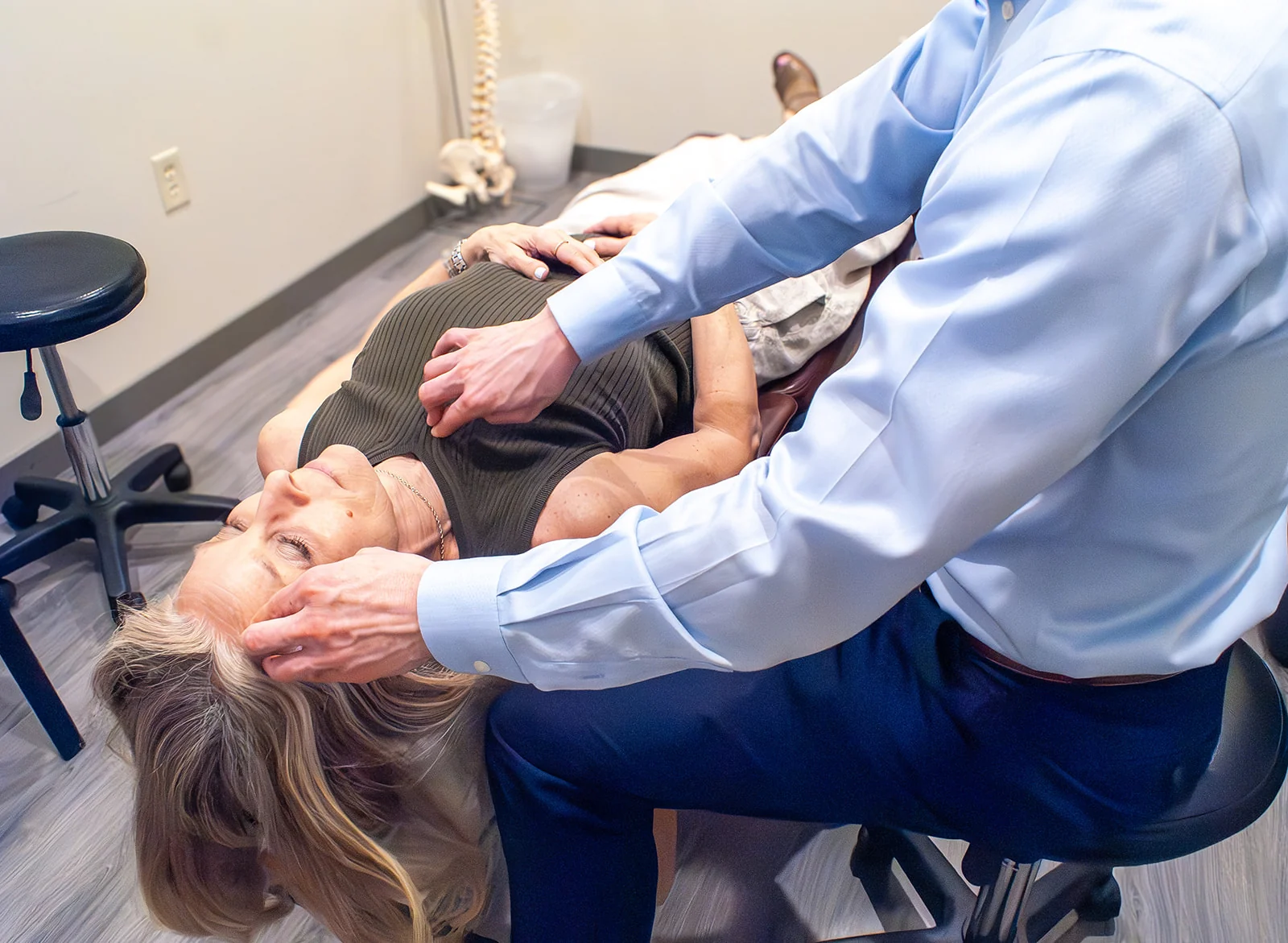
Precision Emotional Memory Release for Stony Creek & Washtenaw County
Drug-free, whole-body care that addresses the root cause — not just the symptoms.
Your Stony Creek Path to Lasting Relief
Emotional memories stored in your nervous system can create ongoing physical and emotional symptoms long after the original event. QNRT therapy helps identify and release these patterns, allowing your body and mind to heal completely.
What sets our emotional memory release apart for Stony Creek patients is the refusal to treat symptoms in a vacuum. A headache might originate in the neck; hip pain might trace back to how the spine is loading; fatigue might be tangled up with sleep that pain has been quietly disrupting for months. Because we evaluate the whole picture before we intervene, we're able to connect dots that single-issue care routinely misses. That perspective is what allows us to build a plan that resolves the actual problem instead of playing an endless game of whack-a-mole with its symptoms.
We also believe good care should be understandable. You shouldn't have to decode jargon or wonder what a given treatment is supposed to accomplish. Throughout your time with us, we explain what we find, why it matters, and how each step of your plan moves you toward your goals — in plain language, with room for your questions. {Location} patients consistently tell us this clarity is a relief after experiences elsewhere that left them confused or rushed. When you understand your own care, you engage with it more fully, and that engagement is one of the strongest predictors of a lasting result.
At Restorative Wellness Center, emotional memory release in Stony Creek begins with a genuine conversation about what you're experiencing and what you want your life to look like again. We know that people rarely search for care until pain, stiffness, or fatigue has already started to reshape their daily routine — skipping the workouts they love, dreading the morning commute, or bracing before they pick up a child. That is why our approach starts by listening, then by understanding the mechanics of what is actually happening in your body, so the plan we build addresses the true source rather than the loudest symptom.
If you've been putting off finding emotional memory release in Stony Creek, you're not alone, and there's no judgment here — only a starting point. The hardest part is often simply booking the first appointment, and from there our team takes the weight off your shoulders. We handle the evaluation, explain what we find in plain language, and design a plan around your schedule, your insurance, and your goals. Whether you're dealing with a recent injury, a stubborn chronic issue, or you simply want to feel and move better, you'll leave your first visit with clarity and a concrete next step.
From students and professionals to active families, Stony Creek patients trust us for whole-body care.
The Root Cause, Not Just the Symptom
Let's break down what you can expect.
Why does that smell trigger anxiety? Why do certain situations provoke irrational responses? Why does your body react with pain or tension to events that shouldn't affect you physically? Emotional memories aren't just mental recollections—they're neurological programs stored in your nervous system that automatically trigger when activated. These stuck patterns create inappropriate stress responses, physical symptoms, self-sabotage behaviors, and emotional reactions disconnected from current reality. Traditional therapy helps you understand these patterns intellectually but often can't deactivate the automatic neurological responses. QNRT accesses emotional memories at the nervous system level where they're stored, identifying and releasing the charge that keeps them active. We're not erasing memories or suppressing emotions; we're helping your nervous system update its response so past trauma stops controlling present experience. This neurological release often produces immediate, profound shifts that years of talk therapy couldn't achieve.
For active people in Stony Creek, ignoring warning signs can quietly undermine everything they've worked toward. Athletes and weekend warriors alike often push through discomfort, assuming it will fade, only to find that a manageable issue has become one that sidelines them entirely. The smarter play is to treat the body like the high-performance system it is — addressing restrictions and imbalances before they force a break. Emotional Memory Release that keeps your body moving well isn't just reactive care; it's an investment in staying capable, resilient, and doing what you love without the fear of the next flare-up.
It's worth understanding how interconnected the body truly is. The nervous system coordinates virtually everything, and when its communication is disrupted — by joint restriction, muscular tension, or inflammation — the effects can ripple far beyond the original site. Headaches tied to neck tension, sleep disrupted by chronic discomfort, or energy sapped by the constant demand of managing pain are all examples. Because our Stony Creek practice takes a whole-body view, we look for these connections rather than treating each complaint in isolation, which is often why patients notice improvements they didn't expect alongside the relief they came in for.
Timing genuinely matters when it comes to musculoskeletal and nervous-system health. Tissues heal best when they're supported early, before scar tissue, chronic inflammation, and adaptive movement patterns set in. Waiting often means a longer road back — more visits, slower progress, and a higher likelihood that the issue recurs. This isn't meant to alarm anyone; it's simply the reason our Stony Creek team prioritizes same-day and early appointments whenever possible. The sooner we can evaluate what's happening, the more options we have and the more efficiently we can help you return to full, comfortable function.
Why Patients Recommend Us
Let's break down what you can expect.
Reviews and referrals are the lifeblood of a practice like ours, and we don't take a single one for granted. When a Stony Creek patient recommends us to a friend or family member, they're putting their own reputation on the line, and that trust is something we work hard to honor with every new person who walks through the door. The feedback below is a small sample, but it reflects a consistent standard of care that we hold ourselves to whether or not anyone is watching.
The reviews that mean the most to us are the ones that mention the little things — a staff member who remembered a detail, a doctor who took the extra minute to explain, a plan that finally made sense. Great outcomes matter enormously, but so does the experience of getting there. For Stony Creek patients, care should never feel like a conveyor belt, and the feedback below reflects a practice built around treating people the way we'd want our own families treated.
"I came in barely able to turn my neck. A few weeks later, I have my range of motion back." — Verified patient
"Back to the gym, back to my life. I can't recommend them enough." — Verified Stony Creek patient
"I was skeptical at first, but the results speak for themselves. I'm back to running without pain." — Verified patient
What Sets Our Emotional Memory Release Apart
Now, let's talk about what sets our care apart.
Thoroughness is non-negotiable in how we work. We'd rather spend the extra time up front getting the evaluation right than rush into treatment and course-correct later. That discipline — measure twice, adjust once — protects our Stony Creek patients from wasted visits and false starts, and it reflects a deeper principle: your body deserves care that's precise and intentional, not guesswork dressed up as confidence.
We hold our care to a simple, demanding standard: measurable change you can actually feel. It's easy to make patients feel attended to; it's harder to produce results that hold up over time, and that's the bar we set for ourselves. We track progress against clear markers, we're candid when something needs to be adjusted, and we won't string anyone along with an open-ended plan that has no defined goal. {Location} patients appreciate that honesty — it means the care they're receiving is accountable to outcomes, not just activity, and that their time and trust are being respected.
Experience shapes everything about how we practice. Over more than a decade serving Stony Creek and Washtenaw County, our team has evaluated and treated an enormous range of cases, from straightforward acute injuries to complex, long-standing conditions that had frustrated other approaches. That depth matters, because pattern recognition — knowing what a presentation likely means and which approach tends to work — is something that only comes from seeing a lot of bodies and outcomes. When you come to us for emotional memory release, you're drawing on that accumulated judgment, not a script.
What We Help Stony Creek Residents With
Consider what that means for your day-to-day.
If you're unsure whether your situation fits, that uncertainty is exactly what an initial visit is designed to resolve. We would rather have an honest conversation about whether emotional memory release is right for you than push care that isn't a good match. During your Stony Creek evaluation we'll assess your concern, explain what we find, and tell you plainly whether we can help and how. If another kind of care would serve you better, we'll say so. That candor is part of the trust our patients place in us, and it's how good care should work.
People come to us for emotional memory release in Stony Creek with a wide range of concerns, and part of our job is figuring out which of them share a common root. Sometimes what looks like several separate problems turns out to trace back to a single area of dysfunction; other times a stubborn symptom needs a more layered approach. Whatever brings you in, the evaluation comes first — we don't assume, we assess. The list below reflects common reasons Stony Creek patients seek care, but your plan is always built around your specific findings, not a diagnosis chosen from a menu.
Unresolved emotional trauma
Chronic stress patterns
Anxiety and panic
Emotional eating
Relationship challenges
Self-sabotage patterns
Local Care for Stony Creek Families
It goes deeper than symptom relief.
The Stony Creek Metropark area attracts outdoor enthusiasts who demand healthcare that supports their active lifestyle—and that's exactly what Restorative Wellness Center delivers. Though 22 miles from our Ann Arbor office, Stony Creek area residents know that exceptional wellness care is worth the drive. We understand the importance of staying active, mobile, and pain-free whether you're hiking, biking, kayaking, or enjoying any of the recreational opportunities that drew you to this beautiful area. Our team specializes in injury prevention, sports performance optimization, and treating the overuse injuries common among active individuals. We've helped numerous Stony Creek area patients return to the activities they love through our holistic approach combining chiropractic expertise, rehabilitative therapies, and personalized wellness strategies that keep you performing at your peak.
Accessibility also means meeting people where they are financially. We're transparent about costs, we work with a wide range of insurance plans, and we'll always explain your options before you commit to anything. Money worries shouldn't stand between Stony Creek residents and the care they need, and we do our part to keep the path to feeling better as clear and affordable as possible. If you have questions about coverage, a quick call to our office is the fastest way to get real answers.
From students and faculty near the university to families in the surrounding townships and professionals commuting across Washtenaw County, Stony Creek is a genuinely diverse community — and our patient base reflects that. We've learned that great care adapts to the person in front of us, whether that's a stressed graduate student, a parent juggling a household, or a retiree determined to stay active. That adaptability is something we're proud of, and it's a big reason Stony Creek residents from every walk of life feel at home here.
What to Expect From Your Care
It starts with understanding what's really going on.
Releasing emotional memories transforms how you experience and navigate life. Triggers that once provoked overwhelming responses lose their power—you can encounter reminders of past trauma without re-experiencing the original pain. Physical symptoms tied to emotional memory patterns often disappear when we release those patterns. Anxiety decreases as your nervous system stops misidentifying current situations as dangerous based on past experience. Self-sabotage patterns dissolve as unconscious emotional programs stop driving destructive behaviors. Relationships improve as you respond to people as they are rather than through filters created by past hurt. Emotional eating and similar compulsions often resolve when we address their emotional memory roots. Many patients report feeling freer, lighter, more themselves than ever before. The changes typically happen rapidly and last because we've addressed the neurological source rather than just processing memories intellectually. Most profoundly, releasing emotional memories allows you to fully inhabit the present rather than unconsciously reliving the past, creating genuine emotional freedom and resilience.
From there, we build a personalized plan rather than applying a one-size-fits-all protocol. Depending on what we find, your emotional memory release care in Stony Creek might combine precise chiropractic adjustments with soft-tissue work, targeted therapeutic technology, nutritional support, and specific movement guidance. The mix is intentional and it evolves — as your body responds, we adjust the plan to keep momentum. You'll always know what a given session is working toward, and we'll track your progress against clear markers so improvement is something you can see and feel, not just hope for.
Your care journey begins with a thorough evaluation. Before we recommend anything, we take the time to understand your history, your daily demands, and your goals, then assess how your body actually moves. This isn't a rushed intake — it's the foundation of everything that follows, because an accurate picture is what allows us to target the true source of your symptoms. Once we understand what's happening, we walk you through our findings in plain language, so you leave that first visit knowing what's going on, why, and exactly what the plan is to address it.
Coordination under one roof is one of the quiet advantages of our model. Because chiropractic, nutrition, soft-tissue therapy, and advanced modalities all live in the same practice, your care is genuinely integrated rather than fragmented across separate providers who never talk to each other. Findings from one area inform the others, and your plan reflects the whole picture. For Stony Creek patients, that means fewer referrals to chase, less repetition of the same history, and a team that shares a single, coherent understanding of your body and your goals.
What Better Movement Gives You Back
This is where our whole-body approach makes the difference.
For active Stony Creek residents, the performance benefits are hard to overstate. A body that moves well recovers faster, tolerates more, and is far less prone to the nagging injuries that derail training and hobbies. Whether you're chasing a personal best, keeping up with your kids, or simply staying strong for the years ahead, emotional memory release that restores efficient movement pays dividends every time you use your body — which is to say, constantly.
There's a mental and emotional benefit that patients rarely expect but almost always mention. Chronic discomfort is a low, constant drain on mood, patience, and focus, and lifting it can feel like a fog clearing. Better sleep compounds the effect. As the body settles, Stony Creek patients frequently report feeling more like themselves — steadier, more present, more willing to say yes to plans — which is a reminder that physical health and everyday well-being are never really separate.
Better movement is a benefit that quietly upgrades everything else. When your joints and muscles work the way they should, ordinary tasks stop costing so much — you're not bracing to lift a bag, dreading the stairs, or shifting in your chair all afternoon. That reclaimed ease adds up across a day and a week, freeing energy and attention you didn't realize your body had been spending on managing discomfort. Many Stony Creek patients describe it as feeling lighter and more capable, even before they consciously notice the pain is gone.
Release of stuck emotions
Reduced physical pain
Improved emotional wellbeing
Better stress resilience
Enhanced relationships
Greater life satisfaction
What to Know Before Your Visit
Here's the approach we take with Stony Creek patients.
Related Services for Stony Creek
Your Comeback Starts With One Call
We'll evaluate, explain, and create a plan tailored to your goals — starting today.