Precision Emotional Trauma Healing for Stony Creek & Washtenaw County
Get back to work, sport, and life — without the pain running the show.
Your Stony Creek Path to Lasting Relief
Unresolved emotional trauma doesn't just affect your mind—it impacts your physical health, creating pain, dysfunction, and illness. Our QNRT therapy helps release emotional patterns stored in your nervous system for complete mind-body healing.
Restorative Wellness Center has spent more than a decade serving Stony Creek and the surrounding Washtenaw County communities, and in that time we've learned that great care is equal parts science and relationship. You are far more likely to reach your goals when you understand what's happening, trust the people guiding you, and feel supported at every step. That's the experience we've built our practice around — thorough evaluation, clear communication, and a treatment plan that adapts as you progress, so you always know where you stand and what comes next on your path to feeling like yourself again.
For many people in Stony Creek, the search for emotional trauma healing follows months or even years of trying to manage discomfort on their own. Over-the-counter medication, heating pads, forum advice, and hoping it simply resolves — these buy time, but they rarely fix what's wrong. Our whole-body philosophy is built on the opposite premise: that the body is capable of remarkable healing when the underlying interference is identified and corrected. We help you understand what's driving your symptoms and give you a clear, realistic path forward so you can stop managing the problem and start resolving it.
We also believe good care should be understandable. You shouldn't have to decode jargon or wonder what a given treatment is supposed to accomplish. Throughout your time with us, we explain what we find, why it matters, and how each step of your plan moves you toward your goals — in plain language, with room for your questions. {Location} patients consistently tell us this clarity is a relief after experiences elsewhere that left them confused or rushed. When you understand your own care, you engage with it more fully, and that engagement is one of the strongest predictors of a lasting result.
If you've been putting off finding emotional trauma healing in Stony Creek, you're not alone, and there's no judgment here — only a starting point. The hardest part is often simply booking the first appointment, and from there our team takes the weight off your shoulders. We handle the evaluation, explain what we find in plain language, and design a plan around your schedule, your insurance, and your goals. Whether you're dealing with a recent injury, a stubborn chronic issue, or you simply want to feel and move better, you'll leave your first visit with clarity and a concrete next step.
Our roots in the Washtenaw County area run deep, and Stony Creek residents are a valued part of our practice.
The Results You Can Expect
The right plan changes everything — here's how.
For active Stony Creek residents, the performance benefits are hard to overstate. A body that moves well recovers faster, tolerates more, and is far less prone to the nagging injuries that derail training and hobbies. Whether you're chasing a personal best, keeping up with your kids, or simply staying strong for the years ahead, emotional trauma healing that restores efficient movement pays dividends every time you use your body — which is to say, constantly.
There's also a preventive dimension to the benefits that's easy to overlook. Once we've resolved the issue that brought you in, the same care that restored your function helps protect it going forward. Better movement patterns, a more resilient nervous system, and the practical strategies you learn along the way all reduce the likelihood of future flare-ups. Many Stony Creek patients transition naturally from active treatment into periodic maintenance, treating their body's health the way they'd treat any valuable system — with regular attention that heads off small problems before they become big ones.
Finally, there's the benefit of prevention you never have to think about. The strongest outcomes are the flare-ups that never happen, the injuries you avoid, the surgery you never need. It's an invisible benefit by nature, but it's often the most valuable one, and it's the natural result of addressing root causes and maintaining the gains you make. For Stony Creek residents, that peace of mind — trusting your body to hold up — is quietly one of the best things emotional trauma healing can give you.
Release of emotional patterns
Reduced anxiety and stress
Improved emotional regulation
Physical pain relief
Enhanced mental clarity
Better overall wellbeing
Hear From Stony Creek Patients
Understanding the cause is the first step. Here's the next:
Long-term relationships are the quiet proof behind the testimonials. Many of the Stony Creek patients who first came to us in pain years ago still visit for periodic maintenance, and they've since sent us their spouses, parents, coworkers, and friends. You don't earn that kind of ongoing trust with a single good visit — you earn it by consistently delivering, over years, on the promises you make. That track record is the foundation everything below is built on.
What we hear most often from Stony Creek patients isn't about a single dramatic moment — it's about the quiet return of normal life. Sleeping through the night again. Getting through a workday without counting the hours until they can lie down. Picking up a grandchild, finishing a workout, taking a trip without planning around pain. Those everyday wins rarely make dramatic testimonials, but they're the truest measure of whether care worked, and they're what we're really aiming for with every plan we build.
"Friendly, professional, and genuinely invested in my recovery. I recommend them to everyone." — Verified patient
"Finally a clinic that treats the whole person, not just the injury." — Verified patient
"My migraines have dropped dramatically since I started care here." — Verified patient
What to Expect From Your Care
So what does care actually involve?
Releasing emotional trauma creates profound transformation across mental, emotional, and physical health. Anxiety and panic attacks diminish or disappear as your nervous system releases stuck stress patterns. Physical pain with no clear structural cause often resolves when we address the emotional components. Digestive function improves as gut-brain dysfunction from trauma heals. Sleep quality returns as nightmares decrease and hypervigilance relaxes. Emotional regulation becomes easier—you respond to current situations appropriately rather than through trauma-distorted perceptions. Relationships improve as trauma patterns stop driving destructive behaviors. Many patients report feeling lighter, more present, and more like themselves than they have in years. The body's natural healing capacity returns as resources stop being consumed managing unresolved trauma. Unlike talk therapy that can take years, QNRT often produces rapid, lasting changes. Most profoundly, releasing trauma allows you to reclaim your life, no longer unconsciously organizing everything around avoiding triggers or managing symptoms of unresolved pain.
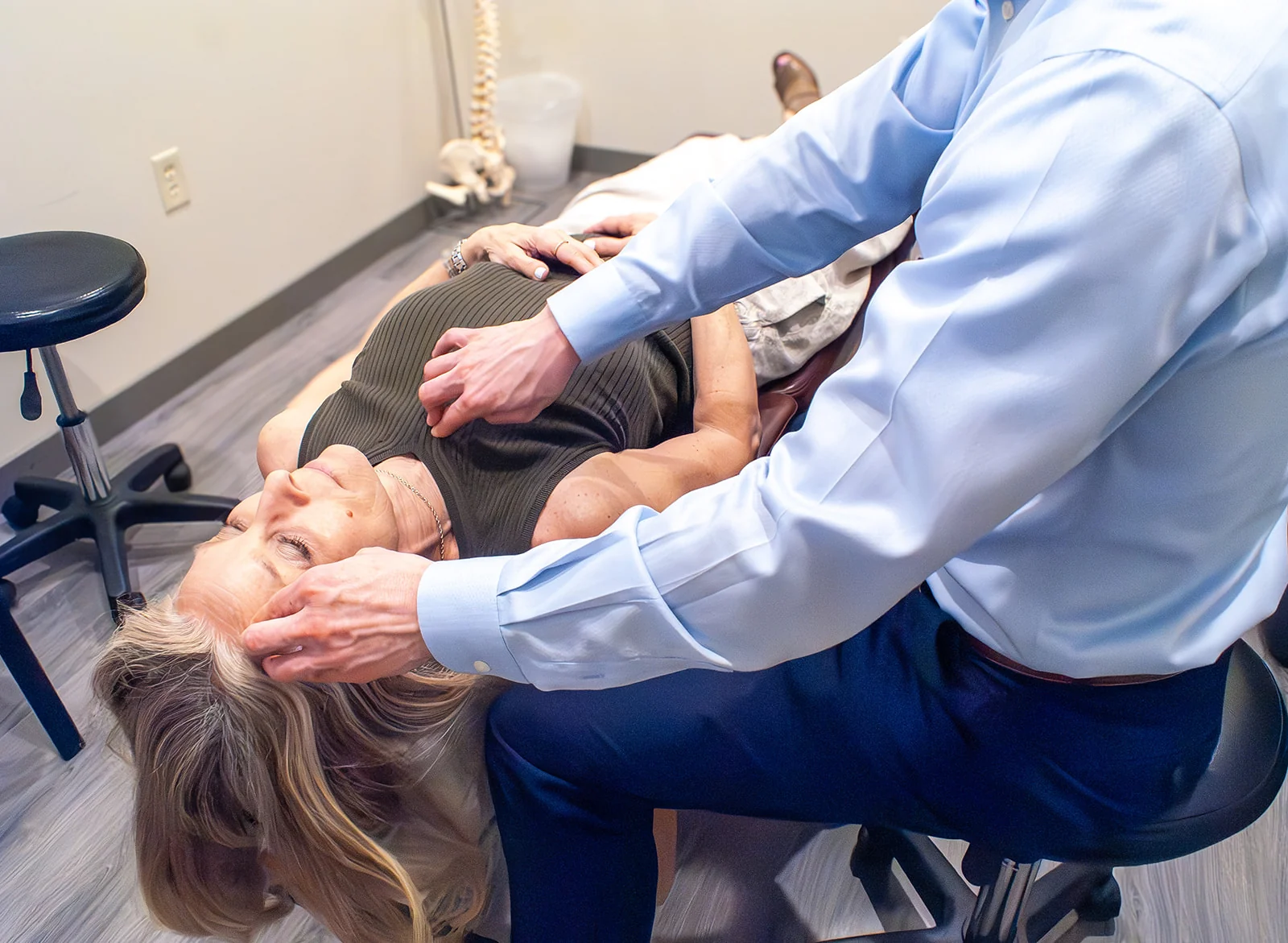
From there, we build a personalized plan rather than applying a one-size-fits-all protocol. Depending on what we find, your emotional trauma healing care in Stony Creek might combine precise chiropractic adjustments with soft-tissue work, targeted therapeutic technology, nutritional support, and specific movement guidance. The mix is intentional and it evolves — as your body responds, we adjust the plan to keep momentum. You'll always know what a given session is working toward, and we'll track your progress against clear markers so improvement is something you can see and feel, not just hope for.
Comfort and communication guide every appointment. Many people arrive nervous, especially if they've never experienced chiropractic care or have heard secondhand stories. We take the mystery out of it: adjustments are precise and controlled, we explain what each technique does and why, and we adapt our approach to what your body tolerates. If something doesn't feel right, we want to know, and we'll adjust. That responsiveness is a big part of why Stony Creek patients stay with us — care should feel like a collaboration, with you fully informed and in control at every step of the process.
Your care journey begins with a thorough evaluation. Before we recommend anything, we take the time to understand your history, your daily demands, and your goals, then assess how your body actually moves. This isn't a rushed intake — it's the foundation of everything that follows, because an accurate picture is what allows us to target the true source of your symptoms. Once we understand what's happening, we walk you through our findings in plain language, so you leave that first visit knowing what's going on, why, and exactly what the plan is to address it.
What Untreated Symptoms Really Do
The right plan changes everything — here's how.
That childhood experience, that toxic relationship, that devastating loss—you thought you'd processed it, moved on, put it behind you. Yet your body remembers what your mind tries to forget. Unexplained anxiety triggers at random moments, chronic pain that has no structural cause, digestive issues that appeared after trauma, or mysterious symptoms that conventional medicine can't explain. Emotional trauma doesn't stay confined to your psyche; it literally encodes in your nervous system, creating persistent stress responses that manifest as physical symptoms. Talk therapy helps you understand trauma but often can't release its grip on your physiology. Our QNRT therapy accesses the nervous system directly, identifying and releasing emotional memory patterns stored in your body. We address trauma where it lives—in your neurological wiring—creating healing that traditional psychological approaches alone cannot achieve.
Untreated discomfort exacts a cost that goes well beyond the physical. Poor sleep, reduced activity, missed work, and the mental fatigue of constantly managing pain all chip away at quality of life. Many Stony Creek patients tell us they had slowly stopped doing the things they enjoyed — long walks, gardening, playing with grandchildren, exercising — not because of one dramatic moment, but because it became easier to avoid than to hurt. Restoring function isn't just about eliminating pain; it's about giving you back the activities and confidence that make daily life feel full again.
There's a common misconception that pain is the problem. In reality, pain is usually the messenger — the body's way of signaling that something upstream needs attention. When care focuses only on silencing that signal, the underlying dysfunction continues unchecked, which is why so many people cycle through temporary fixes that never quite hold. Our emotional trauma healing approach in Stony Creek is built to trace symptoms back to their mechanical or systemic source, so we can address the actual driver. Treat the cause, and the symptom has a reason to stay resolved rather than returning a few weeks later.
It's worth understanding how interconnected the body truly is. The nervous system coordinates virtually everything, and when its communication is disrupted — by joint restriction, muscular tension, or inflammation — the effects can ripple far beyond the original site. Headaches tied to neck tension, sleep disrupted by chronic discomfort, or energy sapped by the constant demand of managing pain are all examples. Because our Stony Creek practice takes a whole-body view, we look for these connections rather than treating each complaint in isolation, which is often why patients notice improvements they didn't expect alongside the relief they came in for.
Local Care for Stony Creek Families
Now, let's talk about what sets our care apart.
The Stony Creek Metropark area attracts outdoor enthusiasts who demand healthcare that supports their active lifestyle—and that's exactly what Restorative Wellness Center delivers. Though 22 miles from our Ann Arbor office, Stony Creek area residents know that exceptional wellness care is worth the drive. We understand the importance of staying active, mobile, and pain-free whether you're hiking, biking, kayaking, or enjoying any of the recreational opportunities that drew you to this beautiful area. Our team specializes in injury prevention, sports performance optimization, and treating the overuse injuries common among active individuals. We've helped numerous Stony Creek area patients return to the activities they love through our holistic approach combining chiropractic expertise, rehabilitative therapies, and personalized wellness strategies that keep you performing at your peak.
Life in and around Stony Creek has its own particular demands on the body. Michigan winters stiffen joints and tempt everyone into slips and shoveling strains; long commutes and desk-bound workdays quietly compress the spine; active summers pack a season's worth of yard work, sports, and weekend projects into a few short months. We see the seasonal patterns because we live here too, and we factor them into the guidance and care we provide to our Stony Creek patients year-round.
Being part of the Washtenaw County community carries a responsibility we take seriously. The relationships we've built with Stony Creek patients over the years are the foundation of our practice, and much of our growth has come from those patients referring the people they care about. That word-of-mouth trust isn't something you can manufacture — it's earned one result at a time. When you choose us for emotional trauma healing, you're joining a community of neighbors who've experienced what thorough, whole-body care can do, and who keep coming back because it works.
Why Trust Restorative Wellness Center
Consider what that means for your day-to-day.
Reputation, in the end, is just the accumulated memory of how you've treated people. Ours across Stony Creek and Washtenaw County has been built one honest evaluation and one real result at a time, and we're keenly aware that it can only be maintained the same way. That awareness keeps us sharp. Every new patient is a chance to earn the trust our name carries, and we treat it that way from the first phone call to the last visit.
One reason patients trust us is that we're willing to say what we don't know. If a case falls outside what emotional trauma healing can appropriately address, or if imaging or a referral is the right next step, we'll tell you — plainly and without ego. Good clinical judgment is as much about recognizing limits as it is about applying technique. {Location} residents can rely on getting a straight answer from us, which is exactly why so many of them come back and send the people they care about.
We hold our care to a simple, demanding standard: measurable change you can actually feel. It's easy to make patients feel attended to; it's harder to produce results that hold up over time, and that's the bar we set for ourselves. We track progress against clear markers, we're candid when something needs to be adjusted, and we won't string anyone along with an open-ended plan that has no defined goal. {Location} patients appreciate that honesty — it means the care they're receiving is accountable to outcomes, not just activity, and that their time and trust are being respected.
Reasons Stony Creek Patients Come to Us
Here's why that matters for your recovery.
If you're unsure whether your situation fits, that uncertainty is exactly what an initial visit is designed to resolve. We would rather have an honest conversation about whether emotional trauma healing is right for you than push care that isn't a good match. During your Stony Creek evaluation we'll assess your concern, explain what we find, and tell you plainly whether we can help and how. If another kind of care would serve you better, we'll say so. That candor is part of the trust our patients place in us, and it's how good care should work.
People come to us for emotional trauma healing in Stony Creek with a wide range of concerns, and part of our job is figuring out which of them share a common root. Sometimes what looks like several separate problems turns out to trace back to a single area of dysfunction; other times a stubborn symptom needs a more layered approach. Whatever brings you in, the evaluation comes first — we don't assume, we assess. The list below reflects common reasons Stony Creek patients seek care, but your plan is always built around your specific findings, not a diagnosis chosen from a menu.
Anxiety and depression
PTSD and trauma
Chronic stress patterns
Emotional eating
Relationship stress
Grief and loss
Emotional Trauma Healing in Stony Creek: Your Questions Answered
That's where our approach comes in.
Related Services for Stony Creek
Book Your Stony Creek Consultation Today
Your health is worth a phone call. Reach out and we'll take it from there.